How to Price a Painting Job
Calculate paint requirements, labour and a target-margin estimate for a painting project.
Try the free calculator ↗Measure the surfaces
Use paintable surface area rather than floor area. Decide how to account for openings, trim, ceilings and difficult access. Keep area and paint coverage in matching units. Confirm the product coverage on its label; porous or rough surfaces can require more material.
Estimate materials and time
Multiply surface area by coats and divide by coverage per paint unit. The calculator estimates fractional paint units; for an actual purchase, round up to available container sizes and include waste, primer and supplies as appropriate. Estimate preparation, masking, application and cleanup time separately, then combine the labour hours.
Protect your quote
Include labour costs and project-specific overhead or allowances. Divide total cost by one minus the target margin. Write down exactly which coats, repairs and surfaces the quote covers; handle unforeseen work through an agreed change process.
Example calculation
Illustrative inputs, not industry averages. Figures are before tax and exclude costs not entered.
| Cost or result | Calculation |
|---|---|
| Paint quantity | 600 ÷ 100 × 2 = 12 units |
| Paint cost | 12 × $35 = $420 |
| Labour | 10 hours × $28 = $280 |
| Other costs | $40 |
| Estimated total cost | $740 |
| Suggested price at 25% margin | $986.67 |
Values rounded for display. All calculations use a consistent currency.
Run your own numbers ↗Is paint coverage the same on every surface?
No. Use the manufacturer’s coverage estimate and adjust for preparation, texture and application method. The calculator does not choose paint or round purchase quantities.
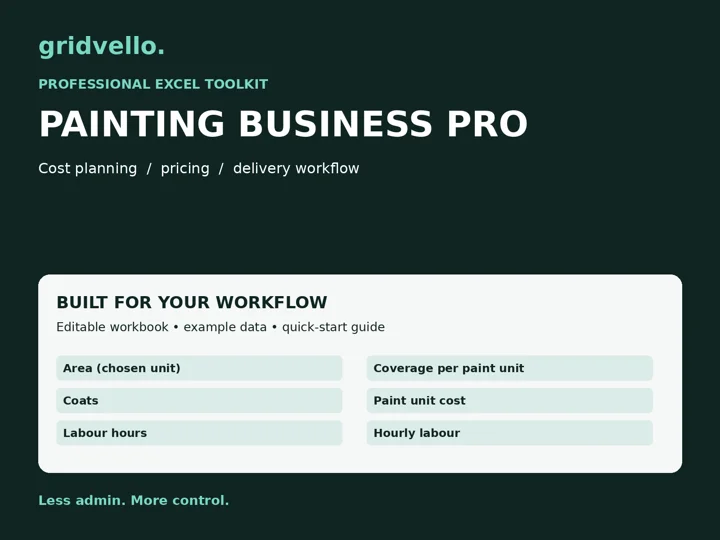
Painting Business PRO
Manage multiple estimates and compare actual results using an editable workbook. Check the listing for exact features and requirements.
View Excel toolkit · €24 ↗